


Extrusion Workshop
For conventional fuel vehicles, the automotive thermal management system mainly comprises the air conditioning system and engine cooling system. The air conditioning system includes compressors, condensers, evaporators, receiver-driers and pipelines. The cooling system timely dissipates heat from hot components to maintain the engine’s optimal operating temperature, available in air-cooled and water-cooled types. Standard components cover water pumps, radiators, expansion tanks and heating assemblies.
We provide tubes, profiles and bar components for automotive AC & engine cooling systems, including:
◇ Tube blanks for radiators, CACs, condensers & heater cores
◇ Plates for evaporators, water-cooled CACs & oil coolers
◇ Headers & side plates for all brazing applications
Features:
Our products feature outstanding brazability, fatigue resistance and corrosion resistance.
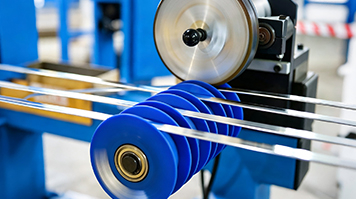
R&D and Testing
Automotive powertrains primarily include engine systems and transmission systems.
Engine performance largely determines a vehicle’s driving capability. For traditional internal combustion vehicles, engines convert fuel into power via four cyclic strokes: intake, compression, power and exhaust. Engines fall into reciprocating engines and rotary engines according to piston movement types. The transmission system transfers power to propel the vehicle. Currently, most transmissions are mechanical or hydromechanical.
Our Product Range
◇ Engine Pistons, VVT Rotors
◇ Drive Shafts, Steering Shafts
Features:
We support customized performance specifications for strength, tolerance, fatigue strength and more.
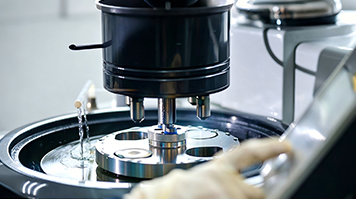
Casting Workshop
The chassis suspension system refers to the assembly connecting the vehicle body and wheels. It bears the vehicle load and absorbs road vibrations to deliver optimal riding comfort. The suspension system consists of shock absorbers, springs, anti-roll bars, connecting rods and other mechanical components. It is mainly divided into two categories: independent suspension systems and non-independent suspension systems. An independent suspension system allows the left and right wheels to move independently. Common types include double wishbone, MacPherson strut, multi-link, trailing arm and semi-trailing arm suspensions. A non-independent suspension system connects the left and right wheels via a single axle or structural component. Typical types include parallel leaf spring, torsion beam axle and standard torsion beam suspensions.
Custom profiles, tubes & bars for chassis and mechanical components, including:
◇ ABS Valve Body
◇ Suspension Components
◇ Suspension Arms
◇ Steering Components
Features:
We support customized performance specifications regarding strength, dimensional tolerance, fatigue strength and more.
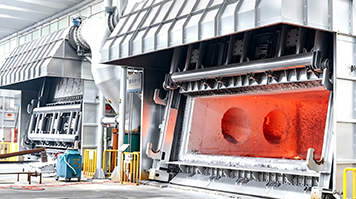
Anodizing Workshop
We support customized performance specifications regarding strength, dimensional tolerance, fatigue strength and more.
Profiles, bars & extended manufacturing services for body, frame and crash systems, including:
◇ Bumper Components
◇ Instrument Panel Crossmembers
◇ Sill Beams
◇ Body Structural Components
Features:
Our body system solutions utilize high-strength 6-series and 7-series alloys to cut weight and enhance yield strength, crash resistance and corrosion resistance.
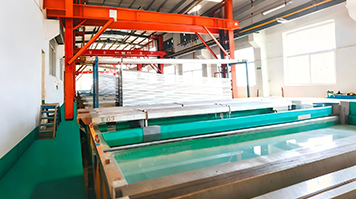
Quality Assurance
We support customized performance specifications regarding strength, dimensional tolerance, fatigue strength and more.
Profiles, bars & extended manufacturing services for body, frame and crash systems, including:
◇ Bumper Components
◇ Instrument Panel Crossmembers
◇ Sill Beams
◇ Body Structural Components
Features:
Our body system solutions utilize high-strength 6-series and 7-series alloys to cut weight and enhance yield strength, crash resistance and corrosion resistance.
 回至顶部

CÔNG TY TNHH NHÔM CHUANGXING VIỆT NAM
Chuangxing Aluminum Vietnam Co., Ltd. (CÔNG TY TNHH NHÔM CHUANGXING VIỆT NAM) is an international manufacturer focused on high-end precision aluminum alloy profiles. Supported by abundant group capital and more than 30 years of aluminum processing expertise, we deliver one-stop solutions from melting, extrusion and CNC machining to anodizing. We serve as a trusted material partner for optics, 3C electronics, automotive lightweighting and related sectors worldwide.